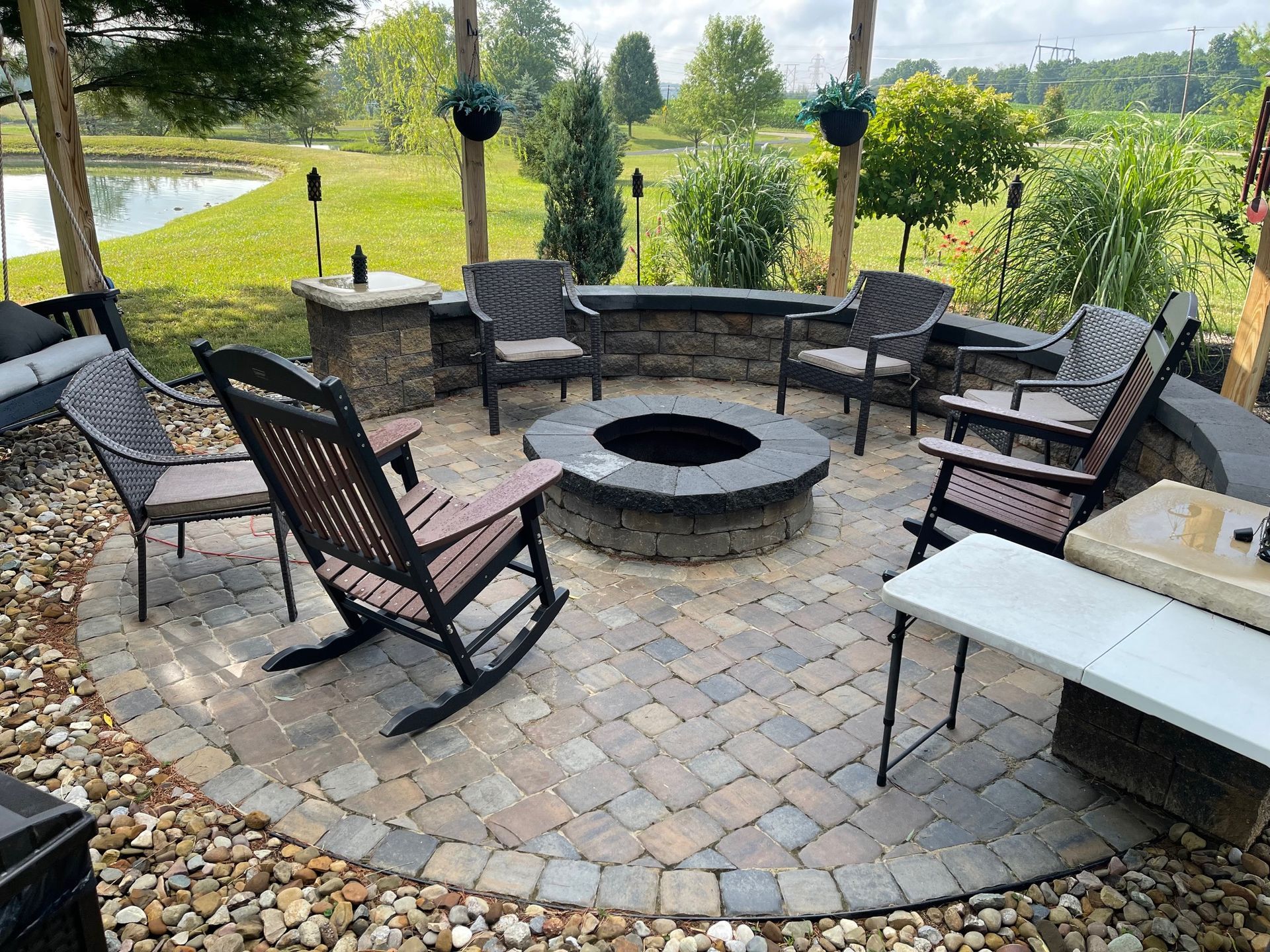
If you are Googling "how much does a paver patio cost" right now, you are probably getting a lot of national averages that do not mean much for someone living in Stark, Summit, or Portage County. We get it. You want a real answer from someone who actually builds these things in your area — not a number pulled from a website in California. So here it is. We are going to give you honest pricing, tell you exactly what drives the cost up or down, and explain why two quotes for the "same patio" can be thousands of dollars apart. This is a high-intent topic — meaning if you are reading this, you are likely ready to move forward but want to make sure you do not get overcharged or hire the wrong company. In Northeast Ohio, our unique climate and soil make "standard" internet pricing almost useless. This guide is built for our area. The Short Answer For most homeowners in Northeast Ohio, a professionally installed paver patio typically falls somewhere in the range of $25 to $40+ per square foot for planning purposes. That includes materials, labor, base preparation, drainage, sealing, and cleanup. High-end or custom projects can go well above that range. Here is what that looks like for common patio sizes: 12x12 patio (144 sq ft): $3,600 – $5,800+ 16x16 patio (256 sq ft): $6,400 – $10,200+ 20x20 patio (400 sq ft): $10,000 – $16,000+ 20x30 patio (600 sq ft): $15,000 – $24,000+ Those are real ranges based on what we see day-to-day in the Akron, Canton, and surrounding areas. Your actual number depends on several factors we will break down below. If someone quotes you significantly below these ranges for a full professional installation, that should raise questions — not excitement. There are places in the process where shortcuts save money up front and cost you big later. Why Northeast Ohio Is Different Our region has factors that contractors in the South or West do not have to deal with. These are "hidden" costs that directly affect what a quality installation looks like here. The Clay Factor Northeast Ohio is famous for heavy, poorly draining clay soil. Clay expands when wet and shrinks when dry. To prevent your patio from looking like a roller coaster in three years, contractors must excavate deeper — usually 8 to 12 inches — and use more tons of crushed stone base than what you will see quoted in national guides. Freeze-Thaw Resilience Our temperatures jump above and below freezing constantly, especially in March and November. This pumping action can pop pavers out of place if the system underneath is not built correctly. A quality Northeast Ohio quote will include geotextile fabric and polymeric joint sand to keep the structure flexible yet locked in. Drainage Requirements Heavy spring rains are a given here. If your yard slopes toward the house, or if water pools anywhere near the patio area, the quote needs to include grading corrections, drainage solutions, or both. Do not skip drainage. Do not skip grading. Even simple things like redirecting a downspout or regrading a small section of surrounding yard can make or break a patio installation over time. Skipping this to save a thousand dollars now could lead to a flooded basement or a failed patio later. What Is Actually Included in That Price? When we quote a paver patio, the price covers a lot more than just the pavers sitting on your lawn. Here is what goes into a proper installation: Excavation and grading. We dig out the area to the correct depth — typically 8 to 12 inches below the finished paver surface depending on soil conditions — and grade it for proper water runoff. In Northeast Ohio, where freeze-thaw cycles are a real issue, skipping this step or going too shallow is one of the most common reasons patios fail within a few years. Compacted aggregate base. This is the foundation of your patio. We install and compact multiple lifts of crushed limestone aggregate to create a base that will not shift, settle, or heave. A proper base in our climate needs to be at least 6 inches of compacted aggregate. This is the single most important part of the job — and the part most often shortcut by less experienced contractors. Geotextile fabric. A woven stabilization fabric between the clay subsoil and the aggregate base. This prevents the clay from migrating up into the stone and compromising the base over time. Bedding layer. A 1-inch layer of limestone chip is screeded on top of the compacted base. This is what the pavers sit in and what allows for final leveling. Pavers. The actual paver product — concrete, brick, or natural stone — selected in whatever color, pattern, and style you have chosen. This is the most visible part of the project, and the material matters. Reputable companies install products that come with some form of a lifetime warranty from established manufacturers like Unilock, Oberfields, Belgard, Techo-Bloc, and County Materials. Some pavers also come pre-sealed from the manufacturer. Edge restraint. Edging is installed around the perimeter to prevent the pavers from spreading outward over time. There are several types — rigid plastic, aluminum, concrete, and others — and what gets used depends on the application, curves vs. straight runs, and what the patio connects to. Polymeric sand. This is the jointing material that goes between the pavers. It locks the pavers together, prevents weed growth, and resists ant infestation and washout. Good polymeric sand matters — cheap sand fails fast. Compaction, cleaning, and sealing. After the pavers are laid, we run a plate compactor over the surface to seat everything firmly, sweep in additional polymeric sand, clean the paver surface, and seal the patio. We always include cleaning and sealing as part of our installations. Most contractors do not, which leaves the patio unprotected from day one and creates more cost for the homeowner down the road. Some pavers come pre-sealed, which changes how this step is handled. Cleanup and haul-away. Removing excavated material, disposing of debris, and leaving the site clean. The Price Breakdown by Material The pavers themselves are the most visible cost, but only one part of the equation. Here is a general idea of what different material types look like when installed: Concrete pavers: $25 – $35 per sq ft installed — budget-friendly with massive variety in colors and styles Brick (clay) pavers: $28 – $38 per sq ft installed — timeless look, colors do not fade Natural stone (bluestone, flagstone): $35 – $50+ per sq ft installed — high-end, luxury aesthetic Outdoor porcelain: $38 – $55+ per sq ft installed — ultra-modern, scratch-resistant, easy to clean These ranges include materials, labor, base prep, and finishing. Actual pricing depends on the specific product, pattern, and site conditions. What Makes the Price Go Up? Not every patio costs the same, and there are real reasons why. Here are the biggest factors that move the needle: Patio Size More square footage means more materials and more labor. That said, larger patios tend to have a slightly lower cost per square foot because setup costs, equipment, and mobilization are spread across more area. Paver Selection Not all pavers cost the same. A standard concrete paver might run $3 to $5 per square foot for the material alone. Step up to a premium line with more texture, color variation, or a larger format and you could be looking at $6 to $12+ per square foot just for the product. Natural stone is the most expensive option, often $10 to $30 per square foot for materials alone. We carry and install Oberfields products as an Authorized Contractor, which means we have access to their full product line and the training to install it correctly. We also have training and experience with other manufacturers including Unilock, Techo-Bloc, and Belgard. Pattern Complexity and Borders A running bond or stacked pattern is faster to lay and requires less cutting. A herringbone, circle kit, or custom inlay pattern takes more time, more cuts, and more waste material. Expect pattern complexity to add 10 to 25 percent to the labor portion of the estimate. Do not forget borders either — a soldier course or accent border adds design detail, but it also adds cuts, time, and material. Demo and Removal If an old patio, concrete slab, deck, tree roots, or poor base needs to come out first, that adds cost. Removal means labor, equipment time, hauling, disposal fees, and usually a little more headache than anyone wanted that morning. Access and Site Conditions If we can get equipment right up to your backyard, that keeps things efficient. If we are hauling materials through a narrow side yard, up a hill, or across a finished lawn that needs to be protected, it takes longer and costs more. If a contractor cannot get a skid-steer into your backyard and has to use wheelbarrows for everything, labor costs will go up significantly. Sloped sites that need extra grading work, areas with poor drainage, or spots with heavy clay all increase the scope of work. Drainage In Northeast Ohio, drainage is not optional — it is a requirement. If your yard does not drain well naturally, we may need to install a French drain, catch basin, channel drain, or correct the grading as part of the patio project. This adds cost, but it protects your investment from water damage, settling, and frost heave. Add-Ons and Upgrades Patio pricing can jump fast when you add features like: Soldier course or accent border Seating wall Retaining wall Steps Fire pit area Lighting Grill pad Walkway connection Pillars Built-in features None of these are bad ideas. They just change the scope. Each one requires its own base prep, materials, and labor. What Makes the Price Go Down? Simple rectangular layouts — less cutting, less waste, less labor time Standard paver products — mid-range concrete pavers from quality manufacturers look great and perform well without the premium price tag Good site access — if we can get equipment and materials close to the work area, we save time and you save money Flat, well-drained yards — less grading and fewer drainage modifications needed Booking in early spring or late fall — our busiest months are June through September. Scheduling in shoulder season can sometimes mean better availability and potentially better pricing Why Do Patio Quotes Vary So Much? Because contractors are often not quoting the same thing. That is the real answer. You might get one quote for $10,000 and another for $18,000 for the exact same square footage. Here is why the cheaper quote might be dangerous: One contractor may be pricing: Minimal excavation (maybe only 4 inches deep — in Ohio, that patio will shift after the first winter) Thinner base No drainage correction Simpler edge detail Lower-cost paver with no manufacturer warranty Cheap bank-run gravel instead of crushed limestone (411s) No stabilization fabric between the clay and the stone Less cleanup No sealing No warranty or limited warranty Another may be pricing: Proper excavation depth (8 to 12 inches for our clay soil) Stronger base prep with quality aggregate Geotextile fabric Better materials with lifetime manufacturer warranties More labor-intensive layout with borders and detail work Better compaction Cleaning and sealing included Cleaner finish work and full haul-away Longer workmanship backing That is why a lower number is not always a better number. Sometimes it is just a smaller scope hiding inside a cheaper quote. So What Should Homeowners Look For? When comparing patio quotes, ask: What paver product is included? Does it come with a manufacturer warranty? How deep will the area be excavated? What base materials are being used? Is there a stabilization fabric? Is drainage being addressed if needed? Are borders, cuts, and edge restraint included? Is cleanup and haul-away included? Is cleaning and sealing included or optional? What warranty is included — both on materials and workmanship? Are there allowances or assumptions in the quote? A good quote should make it easier to compare apples to apples. If you cannot tell what is included and what is not, that is a red flag. Are Paver Patios Worth the Cost? In many cases, yes. Paver patios are popular because they look better than plain concrete to many homeowners, offer a lot of design flexibility, and can be repaired more cleanly if sections ever need to be lifted for utility work or corrected later. Industry guidance from ICPI specifically notes that pavers can be removed and reinstated after below-grade repairs, unlike many other pavement types. When installed correctly, they also handle freeze-thaw conditions well. ICPI guidance states that freezing and thawing damage to pavers is virtually nonexistent because the joints allow movement without typical slab-style cracking. That does not mean every paver patio lasts forever by magic. It means the installation method matters. A great patio starts below the surface. A well-installed paver patio can also add meaningful value to your home. The return on investment depends on material quality, installation quality, and how well the patio integrates with the rest of your outdoor space. The Bottom Line: What Should You Budget? For a typical backyard paver patio in the Akron, Canton, or greater Stark and Summit County area: Small patio (100–150 sq ft): Budget $3,000 – $6,000 Medium patio (200–350 sq ft): Budget $6,000 – $12,000 Large patio (400–600 sq ft): Budget $10,000 – $24,000 Large + features (seat wall, steps, fire pit, lighting): Budget $18,000 – $35,000+ These numbers assume professional installation with proper base preparation, quality materials, cleaning and sealing, and a company that stands behind its work. Pro tip: If the all-at-once price is more than you want to spend right now, ask about phasing. Build the main patio footprint this year, and pre-plan for the fire pit, seat wall, or outdoor kitchen to be added next season. This protects your budget without sacrificing the quality of the foundation. How We Handle Estimates at Enhanced Homescapes We do give ballpark estimates over the phone so you have a rough idea of what a project might cost before we come out. But we dial everything in during an in-person consultation where we look at your yard, talk through what you want, measure the space, assess drainage, access, soil conditions, and demo needs, and then put together a detailed written estimate. You will know exactly what you are getting, what it costs, and why. We do not hide behind vague line items or surprise you with add-ons after the work starts. We require a 50% deposit to get on the schedule. The remaining balance is due upon completion. If you are in Stark, Summit, Portage, or the surrounding counties and you are thinking about a paver patio, give us a call or fill out our contact form. We will come take a look and give you a straight answer. Final Thoughts If you are budgeting for a paver patio in Northeast Ohio, a good starting point is to assume that quality work is usually not bargain-basement cheap. A small basic patio may be fairly affordable. A larger or more custom patio can become a serious investment. The difference usually comes down to size, materials, site conditions, drainage, design complexity, and how thoroughly the contractor is building the system underneath it. Every property is different. Every access situation is different. Every homeowner wants something a little different. And that is exactly why patio pricing varies. If you want a real number, the best next step is a site-specific quote. Ready to Get a Real Number for Your Patio? Stop guessing. Stop comparing quotes that are not quoting the same thing. Fill out our contact form and we will reach out to set up a free on-site consultation. We will look at your yard, talk through what you want, and give you a straight, detailed estimate — no surprises, no pressure, no hidden line items. We serve Stark, Summit, Portage, and the surrounding counties.

A deep dive into materials, costs, and design—designed to help Ohio homeowners choose a patio that survives the freeze-thaw cycle and lasts a lifetime.
What to expect from our process, pricing, and 7-year workmanship guarantee.